Maybe it’s been with you since childhood. Maybe it just showed up one day out of nowhere. Small, dark, sometimes a bit raised or even hairy—moles can be oddly fascinating… and occasionally a little concerning. But what do they really mean? Are they just part of your skin’s story, or could they be warning signs? In this article, we’ll unpack the truth about moles, and more importantly, help you figure out when it’s time to pay closer attention.
What is a mole, anyway?
A mole—also known medically as a nevus—is essentially a cluster of pigment-producing cells in your skin called melanocytes. These cells make melanin, which gives your skin its color. So yes, having a few moles here and there is totally normal—especially if you have lighter skin.
Some people are born with them, while others develop them over the years—most often up until your mid-thirties. Some moles are barely noticeable; others can become more prominent over time, especially if you spend a lot of time in the sun.

Should you be concerned?
For the most part, moles are completely harmless. But—yes, there’s a but—some can change in a way that makes them suspicious. In rare cases, they may turn into melanoma, a serious form of skin cancer.
That’s why keeping an eye on your moles matters. Think of it like noticing a strange noise in your car or a new crack in your wall—something that might not mean anything, but still deserves a closer look.
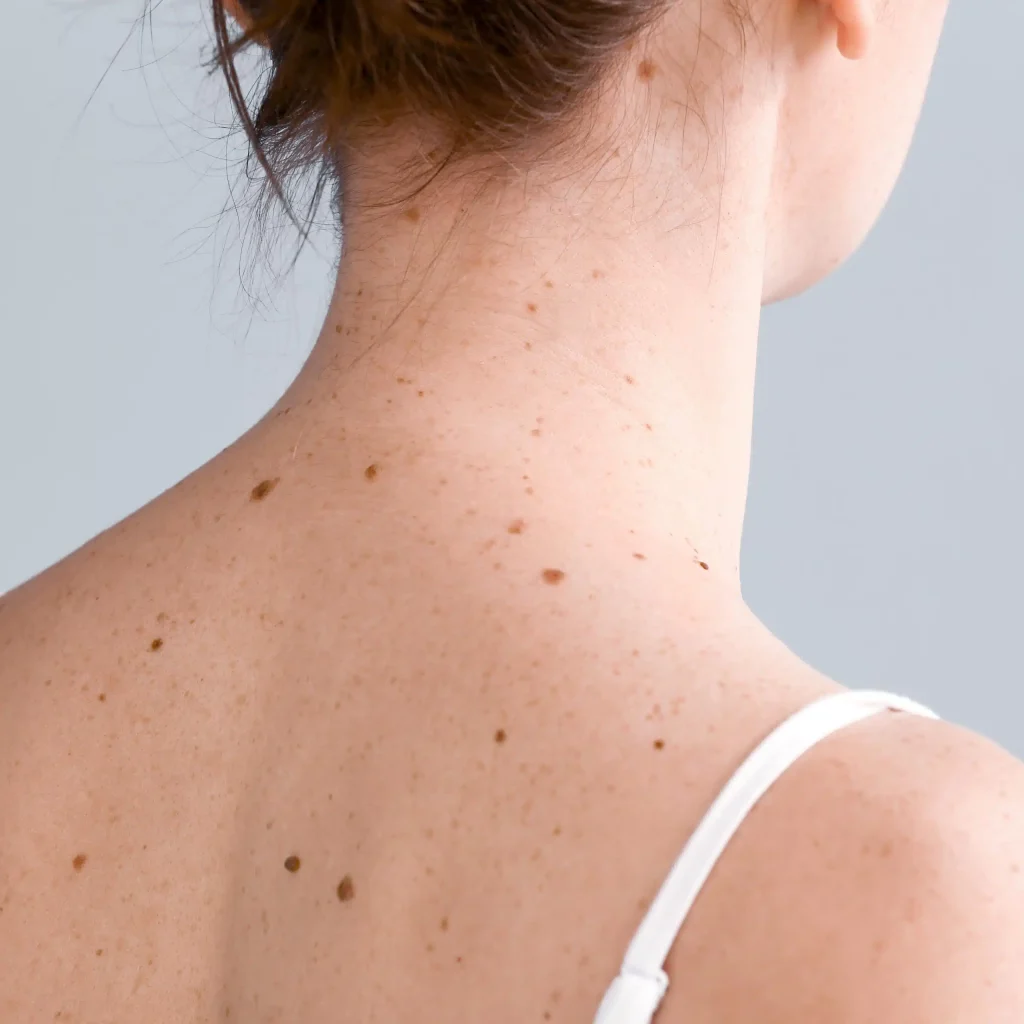
The ABCDE rule: what to look out for
Dermatologists often use the ABCDE rule to spot moles that might need attention. It’s a simple checklist that can help you catch warning signs early:
- A – Asymmetry: One half looks different from the other.
- B – Border: The edges are uneven or not clearly defined.
- C – Color: More than one color in the same mole.
- D – Diameter: Larger than 6 mm (about the size of a pencil eraser).
- E – Evolution: Any change—in shape, size, color, or texture.
Even just one of these signs is a good enough reason to book an appointment. Think of it like remembering the steps for CPR—this could save your life.
Moles and the sun: a tricky relationship
The sun is a bit of a double-edged sword—it can lift your mood, but too much of it isn’t great for your skin. UV rays are one of the main reasons moles can change or multiply, which is why protecting your skin is so important. Use sunscreen regularly, cover up during peak hours (usually between noon and 4 p.m.), and don’t rely on a tan to make you feel “healthy.”
Also, steer clear of tanning beds—they increase your melanoma risk significantly. In fact, in countries like France, they’re banned for minors and strongly discouraged for everyone else.

When should you see a dermatologist?
If you have a lot of moles, fair skin, or a family history of skin cancer, it’s smart to see a dermatologist once a year. Many now use dermoscopy, a high-tech tool that lets them examine your skin in greater detail—kind of like a magnifying glass on steroids.
And if you ever notice a mole changing rapidly—don’t wait. When it comes to your health, being proactive is always the better choice.